
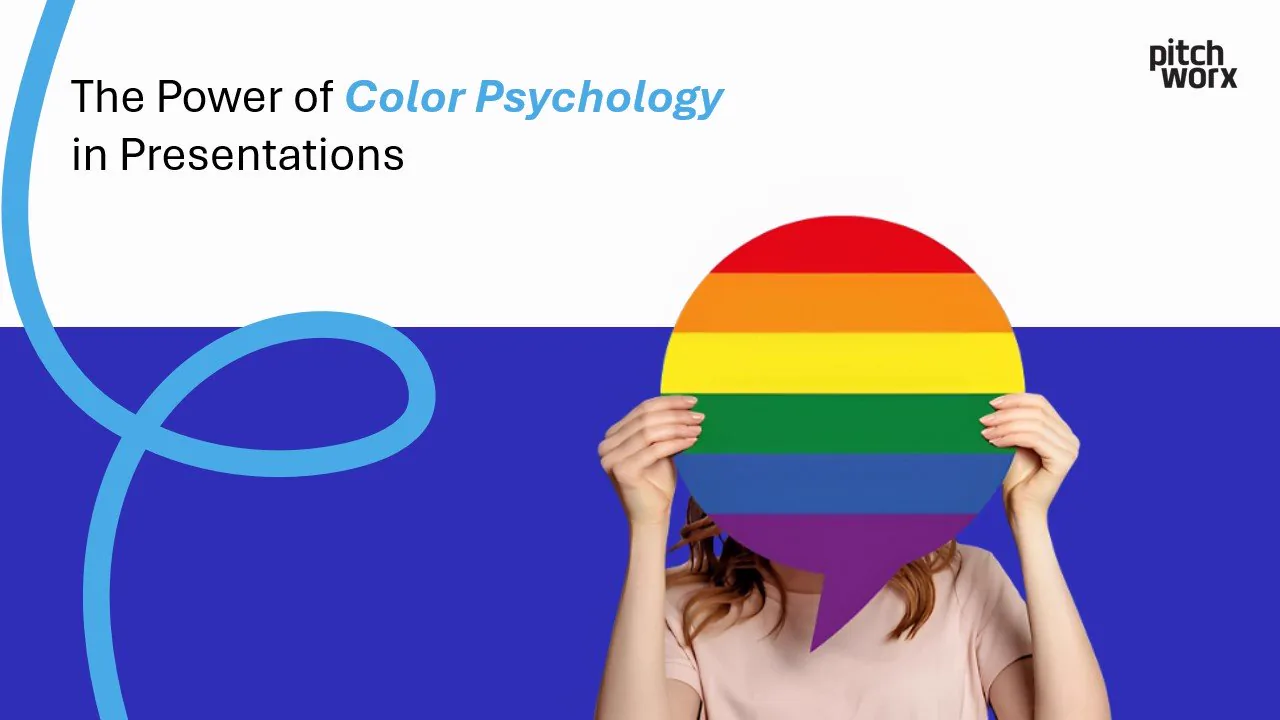
Color isn’t just a design choice; it’s a secret tool that can transform your message. Did you know that color increases brand recognition by up to 80% and drives 90% of product assessments? Used wisely, color in presentation design can turn a standard slideshow into a persuasive story. Whether you’re a public speaker fine-tuning your next TEDx talk or a startup founder pitching to investors, understanding color’s power can set you apart.
This post will reveal the science and strategy behind color psychology, guide you through the effects of specific colors, and share real-world examples from Apple Keynotes, TED Talks, and more. You’ll learn not only how color impacts your audience’s emotions and retention but also how cultural differences and ethical concerns play a role. By the end, you’ll have actionable tips to experiment with color and maximize your own presentations.
What Is Color Psychology? The Basics Behind Emotional Impact
Color psychology explores how colors influence human emotions, behavior, and decisions. It’s a science rooted in neurology; when we see color, it triggers pathways in the brain’s limbic system, shaping our mood and perception almost instantly.
Some key findings on the impact of color:
- Brand recognition jumps by up to 80% with consistent color use. (University of Loyola, Maryland)
- 90% of quick product judgments are based on color alone. (CCICOLOR)
- Strategic color use in presentations increases engagement by 30%. (Presentation Science Institute)
- Color can boost learning and memory by 55-78%. (SEI and SH&A)
The takeaway? Color isn’t just about looks; it’s about connection.
Decoding the Color Wheel: How Each Shade Shapes Perceptions
Not all colors are created equal. Each hue carries distinct psychological associations, and their meanings are often amplified (or altered) by cultural context.
Red
- Emotion evoked: Energy, urgency, excitement, even aggression.
- Best used for: Calls to action, urgent alerts, grabbing attention.
- Cultural notes: Passion and luck in China, danger in Western cultures.
Blue
- Emotion evoked: Trust, calm, security, professionalism.
- Best used for: Corporate presentations, financial reports, healthcare or technology messaging.
- Cultural notes: Associated with masculinity in Western culture, immortality in China.
Green
- Emotion evoked: Growth, harmony, freshness, stability.
- Best used for: Environmental topics, educational settings, wellness presentations.
- Cultural notes: Prosperity in Western cultures, sacredness in Islam.
Yellow
- Emotion evoked: Optimism, happiness, caution.
- Best used for: Highlights, innovation topics, creative industries.
- Cultural notes: Imperial power in China, caution in traffic signs globally.
Orange
- Emotion evoked: Energy, playfulness, affordability.
- Best used for: Startups, retail, food industry pitches.
- Cultural notes: Spirituality in Hinduism and Buddhism.
Purple
- Emotion evoked: Creativity, luxury, wisdom.
- Best used for: Innovation presentations, leadership pitches, education.
- Cultural notes: Royalty in Western history, mourning in parts of Thailand.
Black
- Emotion evoked: Sophistication, elegance, authority.
- Best used for: Luxury products, minimalist themes, high-impact reveals.
- Cultural notes: Mourning in Western cultures, rebirth in Egypt.
White
- Emotion evoked: Simplicity, purity, clarity.
- Best used for: Technology, healthcare, minimalist brands.
- Cultural notes: Mourning in East Asian cultures, purity in Western weddings.
Color Combinations & Contrast
Don’t forget, your message is often communicated just as much by contrasts as by the colors themselves. High-contrast color themes (like dark text on a light background) increase readability, while analogous colors can bring calm and unity.
Applying Color in Presentation Design
Now that you know what colors communicate, how do you use them effectively? Here are strategic tips for color in presentation design:
1. Set Your Objective
Decide what you want your audience to feel and remember. Excitement for a new product? Trust in your expertise? The emotion you aim to trigger should guide your palette.
2. Establish Consistency
Stick to a brand or message palette throughout your deck for professional cohesion. Consistency boosts both engagement and trust.
3. Use Contrast for Emphasis
Highlight key points with color contrasts. For instance, use red or orange for urgent takeaways, blue for calm reassurance.
4. Respect Cultural Sensitivity
If you’re presenting to a global audience, remember that colors carry different meanings. For example, white may symbolize purity in one market and mourning in another.
5. Leverage Color for Learning
Educational data shows color can improve memory and learning by up to 78%. Use color-coded cues for complex visuals, timelines, or processes.
6. Test and Tweak
Not sure which palette resonates best? A/B test your color choices with segments of your audience when possible, and adjust based on response data.
Ethical Considerations
Colors can be used to persuade—but also to manipulate. Stay transparent and avoid deceptive uses (e.g., using green to exaggerate environmental benefits). Ethical persuasion builds long-term trust.
Case Studies in Color Psychology
Apple Keynotes
Apple’s legendary presentations are a master class in color psychology. Their sparse use of color on slides—with bold splashes only when introducing groundbreaking products or features—directs audience focus and heightens anticipation. The minimalist palette reinforces a sense of innovation and quality.
TED Talks
TED speakers leverage backgrounds and lighting in hues designed to fit the subject. Talks about hope and creativity often feature yellows and oranges; tech-focused talks lean on calming blues and bold reds to convey authority or urgency.
Political Campaigns
Color in presentation design takes center stage during elections. Politicians deploy red, white, and blue to evoke patriotism in the United States, or choose carefully curated palettes that tap into national sentiment. Shade choice can make a candidate seem more trustworthy or competent.
Educational Workshops
Educators often use blue and green for classroom presentations, creating a calming atmosphere that fosters learning and focus. Color-coded graphics break down complex ideas and help students organize information.
Why Color Psychology Matters in Your Presentation Strategy
Effective use of color is not just about pretty slides; it’s about making your message stick. The right combination can sway perception, boost memory, and create emotional resonance. But it’s equally important to consider cultural backgrounds and act ethically.
If you want your next pitch or keynote to engage and persuade, color in presentation design is a tool you simply can’t ignore. Start small, experiment with different palettes, and use data (like audience feedback or A/B test results) to refine your approach.
What color choices have worked best in your presentations? Share your experiences in the comments below. Your insight could help someone prepare a more compelling talk!